
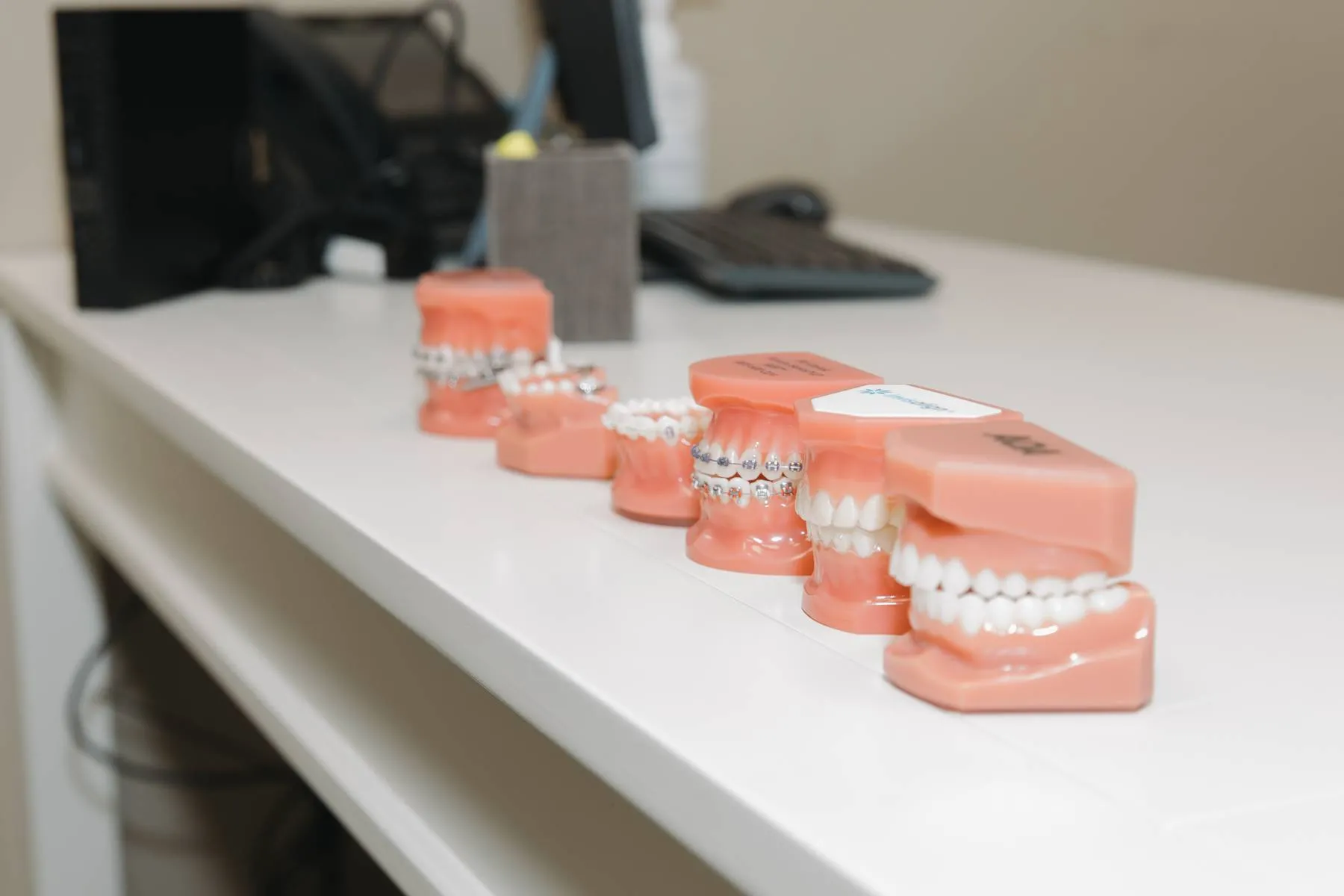
If you're weighing Invisalign or metal braces, the short answer is this: both are FDA-cleared smile treatments that straighten teeth using gentle, gradual pressure. Braces work best for complex cases and patients who want a fixed appliance, while Invisalign suits those who prefer a removable, nearly invisible option and can commit to wearing aligners 20-22 hours daily. If you are weighing clear aligners in Nashville, our Invisalign page covers candidacy, timelines and cost.
Invisalign vs Metal Braces: What Are They?
Both options have helped countless patients achieve straighter smiles, but they take different paths to get there. Metal braces use brackets bonded directly to your teeth, connected by archwires that your orthodontist adjusts over time. Invisalign takes a different approach, using a series of clear, removable plastic aligners custom-made for your smile.
The biggest practical difference? Braces stay on 24/7 until your treatment ends. Invisalign aligners come out when you eat, drink, and brush your teeth. Either approach can correct most alignment issues, from crowding and spacing to bite problems. The right choice depends on your specific case, lifestyle, and what matters most to you. A free consult with the team at Lucas Orthodontic Group can help you sort through the options without any pressure.
How Each Treatment Moves Your Teeth
Here's the quick answer: both braces and Invisalign apply steady, light pressure that gradually shifts your teeth into better positions. That force triggers your body's natural bone remodeling process. The bone around each tooth breaks down on one side and rebuilds on the other, allowing teeth to move into their new spots.
Our experienced board-certified orthodontists plan each movement so results hold up over time.
With Metal Braces
Your orthodontist bonds brackets to each tooth and threads an archwire through them. Elastic bands and other attachments help guide specific movements. You'll visit the practice every 4-8 weeks for adjustments. Your orthodontist tightens wires, changes elastics, and monitors progress at each visit.
With Invisalign
Treatment starts with digital impressions of your teeth, so there's no goop and discomfort. Your orthodontist maps out your full treatment plan before you even start. You'll wear each set of aligners for 1-2 weeks, then switch to the next set in the series. The aligners need to stay in 20-22 hours daily to work properly.
Most treatment plans run 12-24 months for either option. Your case complexity drives the timeline more than the appliance type.
What Are the Benefits of Braces vs Invisalign?
Why Do Patients Choose Metal Braces?
- Handles complex cases well. Severe rotations, significant bite issues, and major alignment corrections often respond better to braces.
- No compliance worries. Since braces stay on, they're working constantly. You don't have to remember to wear them.
- Works for kids, teens & adults at all stages of dental development.
- Lower self-discipline burden. You can't accidentally leave your braces at a restaurant.
Why Do Patients Choose Invisalign?
- Nearly invisible aligners that are hard to spot, even up close
- Removable for meals, so eat whatever you want
- Easier oral hygiene since you brush and floss normally
- Fewer emergency visits with no broken brackets or poking wires
- Often fewer visits to the practice, with virtual check-ins available
Invisalign vs Metal Braces: Side-by-Side Comparison
| Factor | Metal Braces | Invisalign |
|---|---|---|
| Appearance | Visible metal brackets and wires | Clear, nearly invisible aligners |
| Comfort | May irritate cheeks and lips initially | Smooth edges; tightness with new trays |
| Daily Wear | Fixed 24/7 | Removable; requires most of the day and night |
| Eating | Avoid hard, sticky, and crunchy foods | No restrictions when aligners are out |
| Oral Hygiene | Special flossers and brushing techniques needed | Remove aligners; brush and floss normally |
| Office Visits | Every 4-8 weeks | Every 8-12 weeks typically |
| Compliance | Works passively | Requires commitment to wear schedule |
| Best For | Complex cases, younger patients | Mild-moderate cases, adults wanting a discreet option |
Each treatment causes some discomfort. Braces can rub against your cheeks, especially in the first few weeks. Invisalign creates pressure and tightness each time you switch to new aligners. Most patients adjust within a few days either way.
The good news? Each option has been refined over decades. Modern materials make either experience more comfortable than it was even ten years ago.
The compliance factor matters more than people expect. Invisalign only works if you actually wear the aligners. If you're honest with yourself about whether you'll stick to the schedule, you'll make a better decision. Parents of teens often find this conversation especially helpful before committing to one path or the other.
Cost Factors: What Affects Your Investment
Invisalign and metal braces typically fall within similar price ranges. The complexity of your case usually drives cost more than the type of appliance you choose. Simple alignment fixes generally cost less than treatment for severe crowding paired with bite correction.
What influences your total cost:
- Case complexity, since simple spacing issues cost less to treat than severe crowding with bite problems
- Treatment length, because longer treatment means more visits and materials
- Geographic location, as costs vary by region and practice
- Refinements needed, with some cases requiring additional aligners or extended braces time
Making treatment work for your budget:
Most insurance plans cover smile treatment equally whether you choose braces or Invisalign. Check your specific benefits, since many plans cover a portion of either option.
HSA and FSA funds can reduce your out-of-pocket costs. Many practices offer reasonable pricing and low monthly payment options to help families plan for treatment.
One thing to consider with Invisalign: lost or damaged aligners may cost extra to replace. Keep track of your trays.
Who's a Better Candidate for Each?
The right fit depends on your teeth and your life. Your orthodontist evaluates tooth position, bite, jaw development, and lifestyle to recommend the best option. Here's a general guide for patients weighing these two paths.
Metal braces tend to work better for:
- Complex bite issues like severe overbites, underbites, or crossbites
- Significant crowding or rotation problems
- Younger kids who haven't lost all their baby teeth yet
- Patients who know they won't consistently wear removable aligners
- Cases requiring two-phase treatment
Invisalign tends to work better for:
- Mild to moderate crowding or spacing
- Minor bite adjustments
- Teens and adults who want a discreet option
- Patients committed to wearing aligners most of the day and night
- People who travel frequently or have unpredictable schedules
Here's the truth: a free consult with digital impressions is the only way to know for certain which option fits your case. The board-certified orthodontists at Lucas Orthodontic Group can evaluate your specific teeth, bite, and goals to recommend the best path forward.
Some patients are candidates for both. In those situations, your lifestyle preferences can guide the decision.
Frequently Asked Questions
Should I choose Invisalign or metal braces?
The best choice depends on your case, lifestyle, and preferences. Invisalign works well for mild to moderate alignment issues and patients who want a discreet, removable option. Metal braces handle complex cases more reliably and don't depend on your wear schedule. A free consult with our team at Lucas Orthodontic Group is the best way to know which fits you.
Does Invisalign work as well as braces?
For most cases, yes. Invisalign works well for mild to moderate crowding, spacing, and many bite issues. Complex cases involving severe rotation or significant skeletal problems may respond better to braces. Your orthodontist can tell you which option will deliver the results you're looking for.
Which is faster, braces or Invisalign?
Treatment time depends on your specific case, not the appliance. Simple cases might wrap up in 12 months with either option. Complex cases can take 24 months or longer regardless of which treatment you choose. Following your orthodontist's instructions closely helps keep treatment on track.
Can teens use Invisalign?
Absolutely. Invisalign Teen includes compliance indicators that show whether aligners are being worn enough. It also has special features for teeth that haven't fully erupted yet. Many teens prefer the discreet appearance, especially for school photos and social events.
Is Invisalign more expensive than braces?
Not necessarily. Costs are now comparable for similar cases. The complexity of your treatment affects price more than the appliance type. During your free consult with our board-certified orthodontists, you'll get a clear picture of what your specific treatment will cost.
Do braces hurt more than Invisalign?
Each option causes mild soreness. Braces create discomfort after adjustments, usually lasting a few days. Invisalign causes tightness when you switch to new aligners. Most patients describe either experience as manageable. Over-the-counter relief helps if needed.
Can I switch between treatments mid-course?
Switching between braces and Invisalign mid-treatment is sometimes possible, but it typically adds cost and extends your timeline. Starting with the right option from the beginning saves time and money. That's why a thorough free consult matters; it helps you choose wisely from day one.